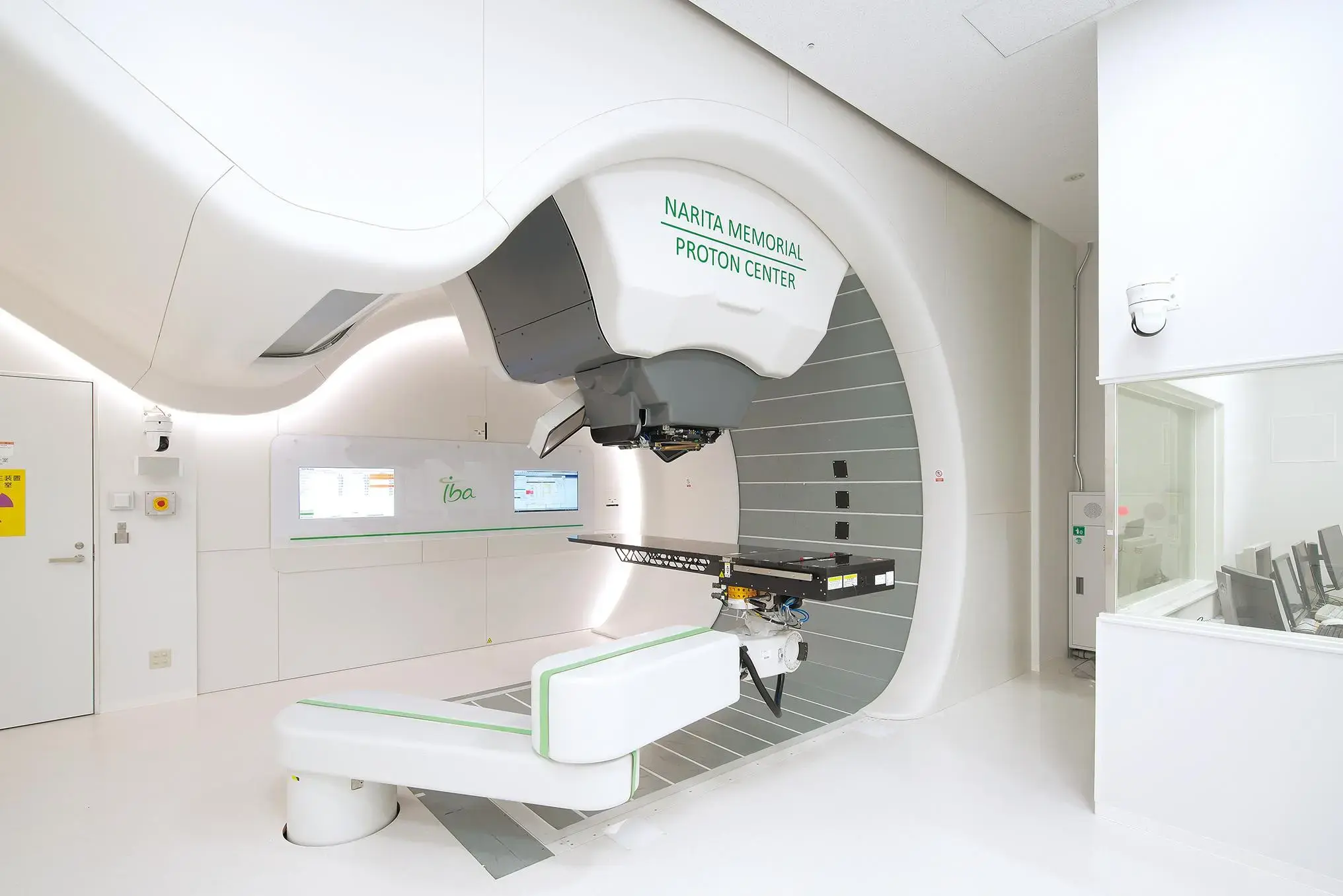
From an Empty Building
Raghav joined IBA as an Electromechanical Engineer and completed technical and safety training in Belgium and Poland before deployment to Toyohashi, Japan.
He arrived as the first IBA engineer at the Narita Memorial Proton Center site. The building was largely empty: major equipment still had to be received, rigged, aligned, connected and integrated with the facility.
The work depended on an international IBA team, Japanese contractors and specialist vendors. Engineering communication had to be explicit, visual, documented and verified rather than assumed.
Quality Before Commissioning
Within his assigned scope, Raghav supervised subcontractor work, inspected installation against drawings and expected function, and rejected incomplete or substandard work before it could progress.
Where corrections were required, the priority was not cosmetic neatness. Cable routing, connector work, labelling, pneumatic installation and maintainability all affected whether later commissioning could start from a trustworthy foundation.
Corrected work was manually tested, documented and signed off before unit testing. The emphasis was quality, clarity and maintainability rather than a personal claim of schedule acceleration.
Recovering the Positioning System
One demanding thread involved the patient-positioning system, where drivetrain, braking, power, controls and alignment issues interacted rather than appearing as isolated faults.
Raghav worked hands-on through disassembly, measurement, diagnosis and corrective-design input while treating the mechanical and electrical issues as one integrated positioning system.
Specialist metrology supported repeat validation. Corrected work returned through testing before acceptance, without publishing proprietary geometry, settings, acceptance parameters or failure mechanisms.
Commissioning Across System Boundaries
The commissioning environment crossed treatment-room mechanics, major assemblies, pneumatics, conditioned-water cooling, PLC, SCADA and HMI interfaces, X-ray installation and alignment, beam-line vacuum leak detection, industrial computers and facility utilities.
Raghav collaborated with accelerator, beam, IT and specialist vendor teams while faults were isolated across subsystem boundaries and returned through controlled checks.
Rotating-shift work required disciplined handover, issue tracking and careful control of what was safe to access or energise. This Story intentionally avoids safety-control design detail and proprietary architecture.
A Disciplined Acceptance Campaign
Acceptance was treated as evidence of readiness, not as a place to discover unresolved fundamentals. Work moved through unit tests, subsystem integration, full-system integration, customer acceptance and regression after corrective work.
Documentation and sign-off mattered because each correction had to leave a traceable path back into the relevant verification activity.
Installation was not complete when the equipment was in place. It was complete when the interfaces had been tested, documented and trusted.
Training for Operational Readiness
As the system moved toward routine support, Raghav trained four locally engaged technicians in system architecture, start-up and shutdown, PLC, SCADA and HMI concepts, conditioned-water systems, alarms, practical fault isolation and escalation boundaries.
The aim was operational readiness: the local technical team needed to operate, interpret and escalate safely, not become accelerator designers or clinical specialists.
From First Patient to Stable Handover
Customer acceptance was completed, the system entered operation and Raghav was present when the centre treated its first patient in September 2018.
He remained through early operational support and stabilisation as routine responsibility transitioned to the local technical team. His role remained technical.
Clinical decisions, medical-physics acceptance and authority to treat patients remained with the relevant authorised specialists.

Engineering Lessons
- Installed equipment is not yet a delivered system.
- Interface quality determines commissioning quality.
- Corrective work must return through the relevant regression tests.
- Acceptance should demonstrate readiness, not discover unresolved fundamentals.
- Technical authority can be exercised through standards, evidence and sign-off without a formal management title.
- Handover is complete only when the receiving team can operate, interpret and escalate safely.